

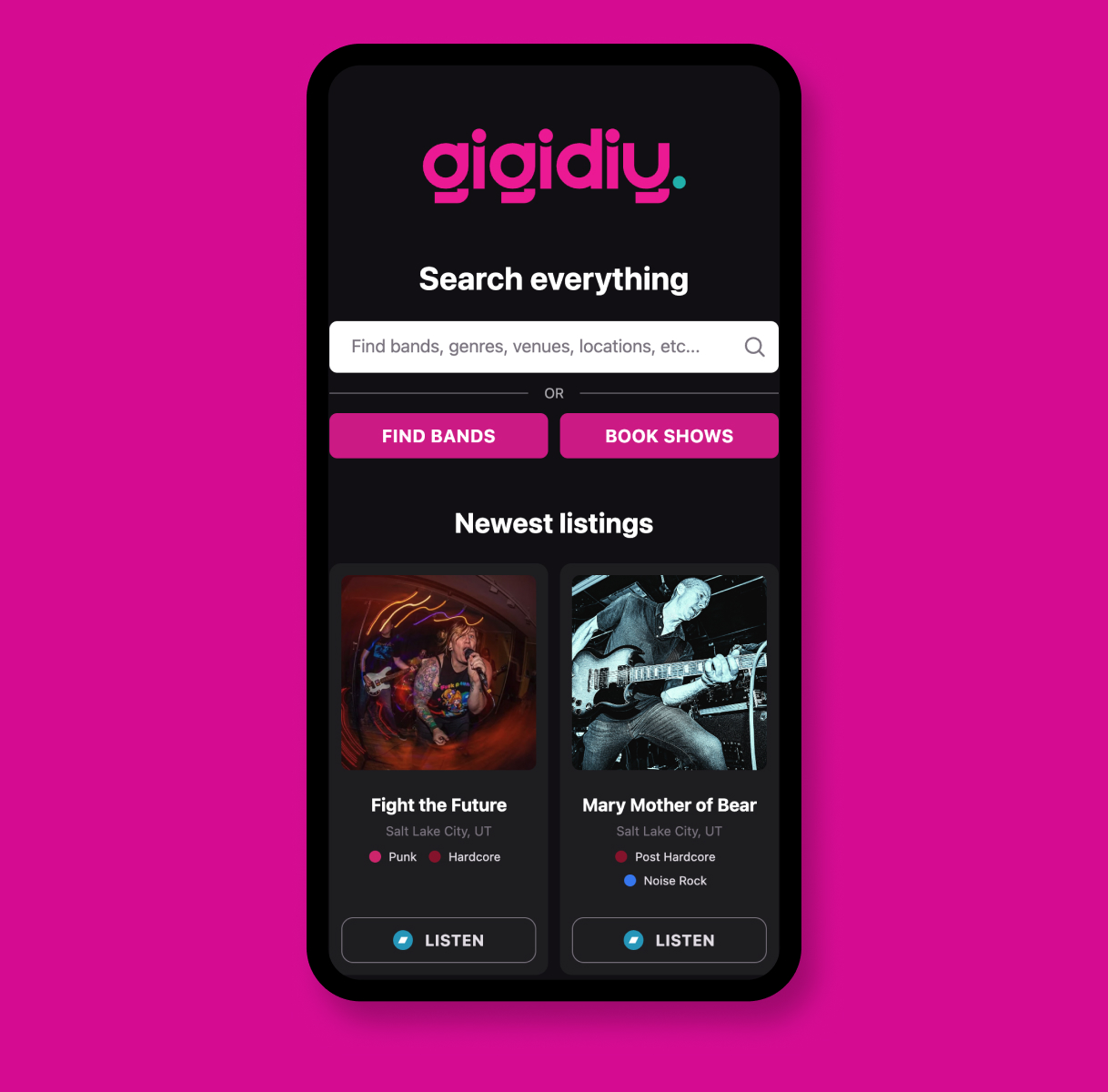
gigidiy.app
OVERVIEW
There are currently no tools designed specifically for the DIY live music promoter. In the independent music scene, the DIY mindset is not optional—it’s the default. Bands are routinely responsible for finding venues, coordinating with promoters, and booking their own shows every time they perform.
gigidiy was conceived to support both indie bands and grassroots promoters by streamlining this outdated, fragmented process. The goal was to modernize show booking without losing the autonomy and community-driven spirit that defines DIY music culture.
Note: Early design artifacts may display the working title used during initial exploration.
ROLE
UX/UI Designer
UX Research & Strategy, Interaction Design, Visual Design
Development
AI-assisted development using HTML/CSS, React Native, Firebase, GIT, Netlify
Status:
Beta
BACKGROUND
Throughout the 1990s and early 2000s, a punk and alternative zine called MaximumRocknRoll released an annual special edition titled BYOFL (Book Your Own Fuckin’ Life). The publication served as a lifeline for bands without booking agents, providing contact information for venues and promoters across the country.
In a pre-internet, pre-social-media era, BYOFL enabled countless bands to tour—often in places where booking a show felt nearly impossible.
"How 'Book Your Own Fuckin' Life' helped countless punk bands tour in the pre-internet era."
-Vice.com
What’s surprising is how little the core process has changed in the last 20 years. While communication has shifted from phone calls to social media DMs, the workflow itself remains largely manual, inefficient, and inconsistent. gigidiy was designed to challenge that stagnation.

DISCOVERY
Research & Analysis
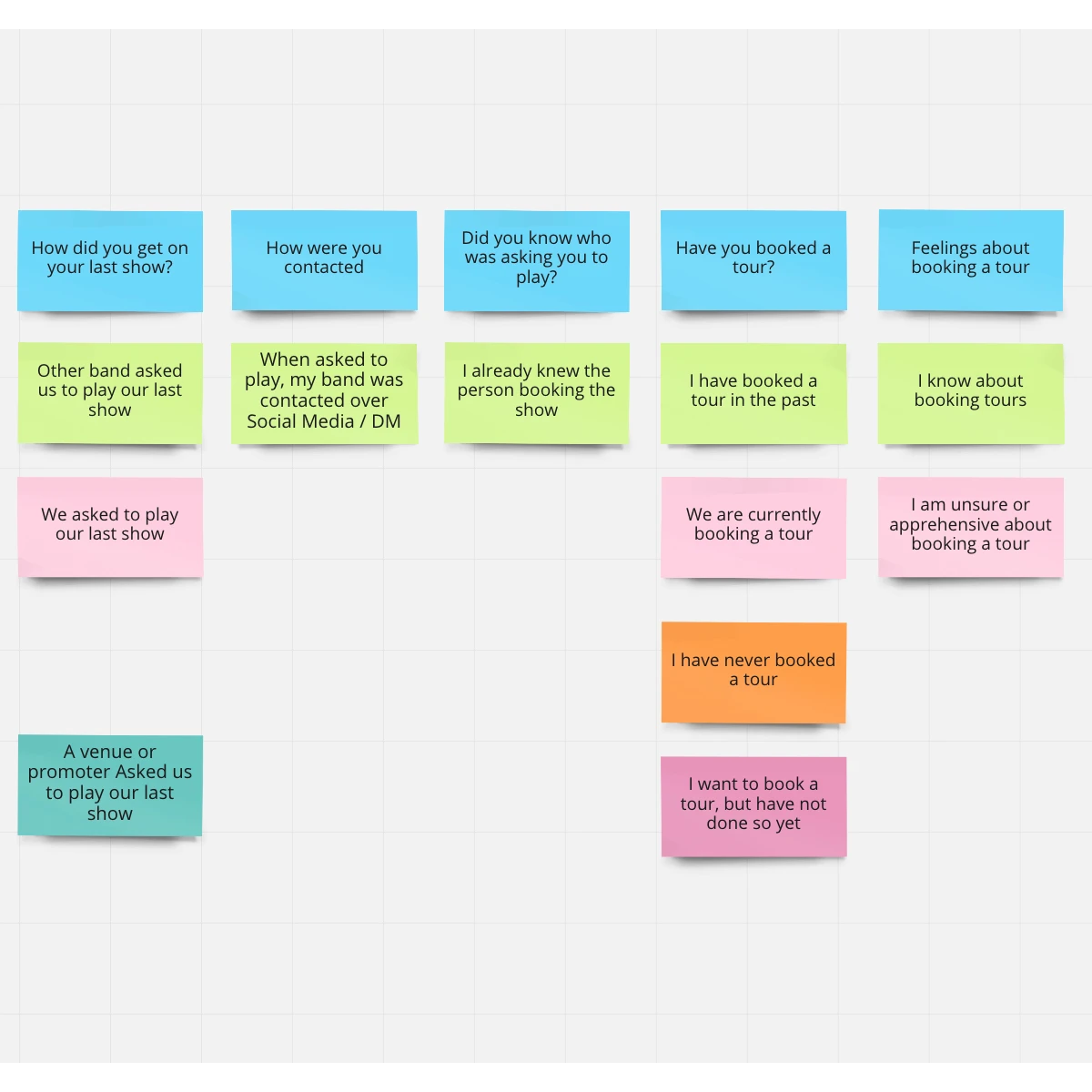
Two surveys were distributed using SurveySparrow to better understand:
- How bands and promoters communicate
- Which devices they rely on
- The biggest obstacles they face when booking shows
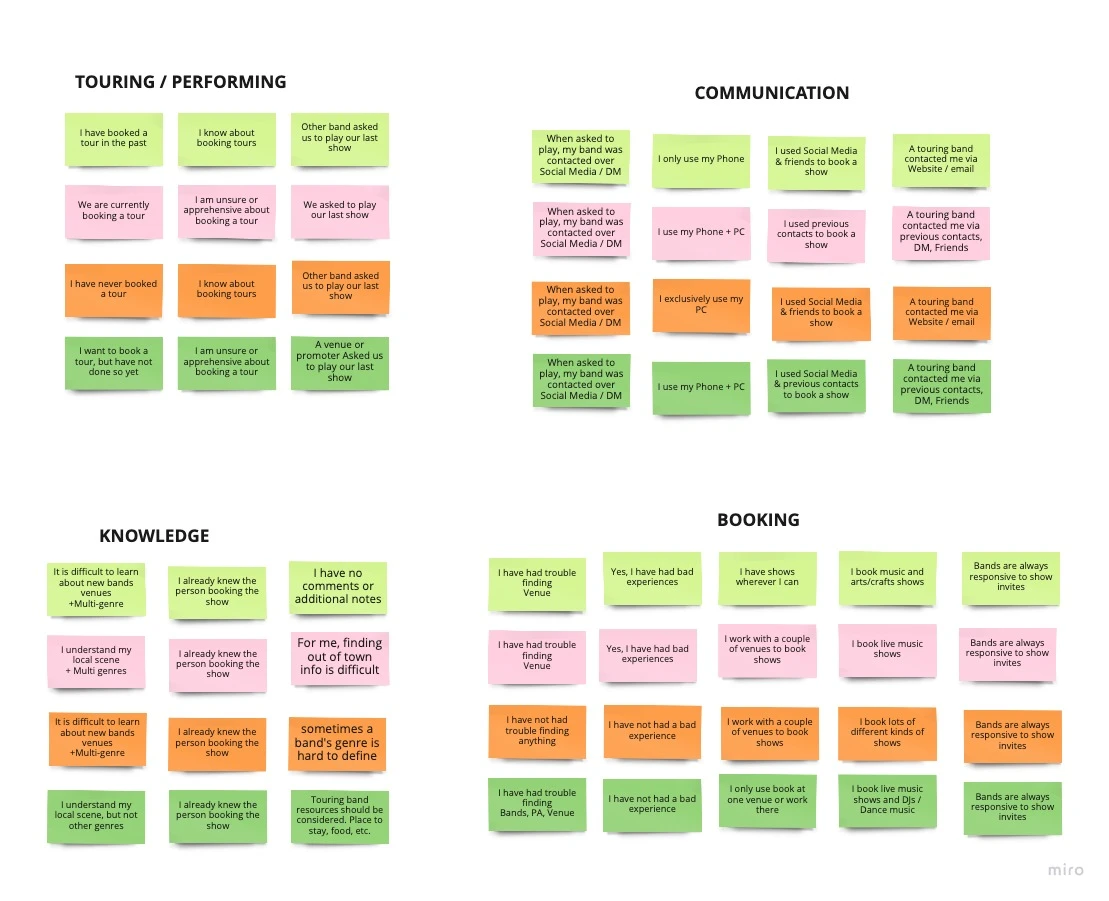
The results confirmed a key assumption: the booking process has barely evolved, reinforcing the need for a purpose-built solution.
Research synthesis was conducted using digital sticky notes in Miro, allowing patterns and priorities to emerge quickly without unnecessary overhead.


DESIGN
Concepts & Sketching
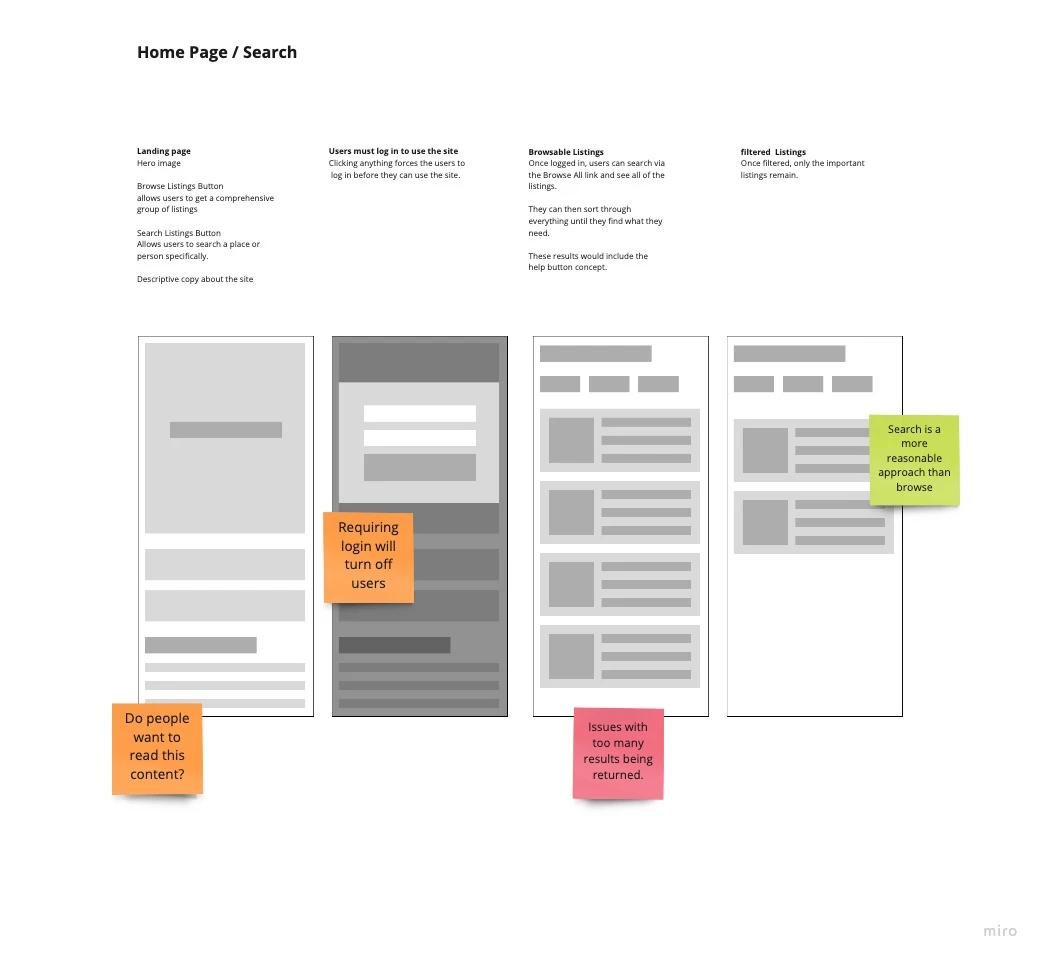
Given that over 50% of participants plan events primarily on their phones, the application was designed mobile-first, with the expectation that the final product would become a responsive web app.
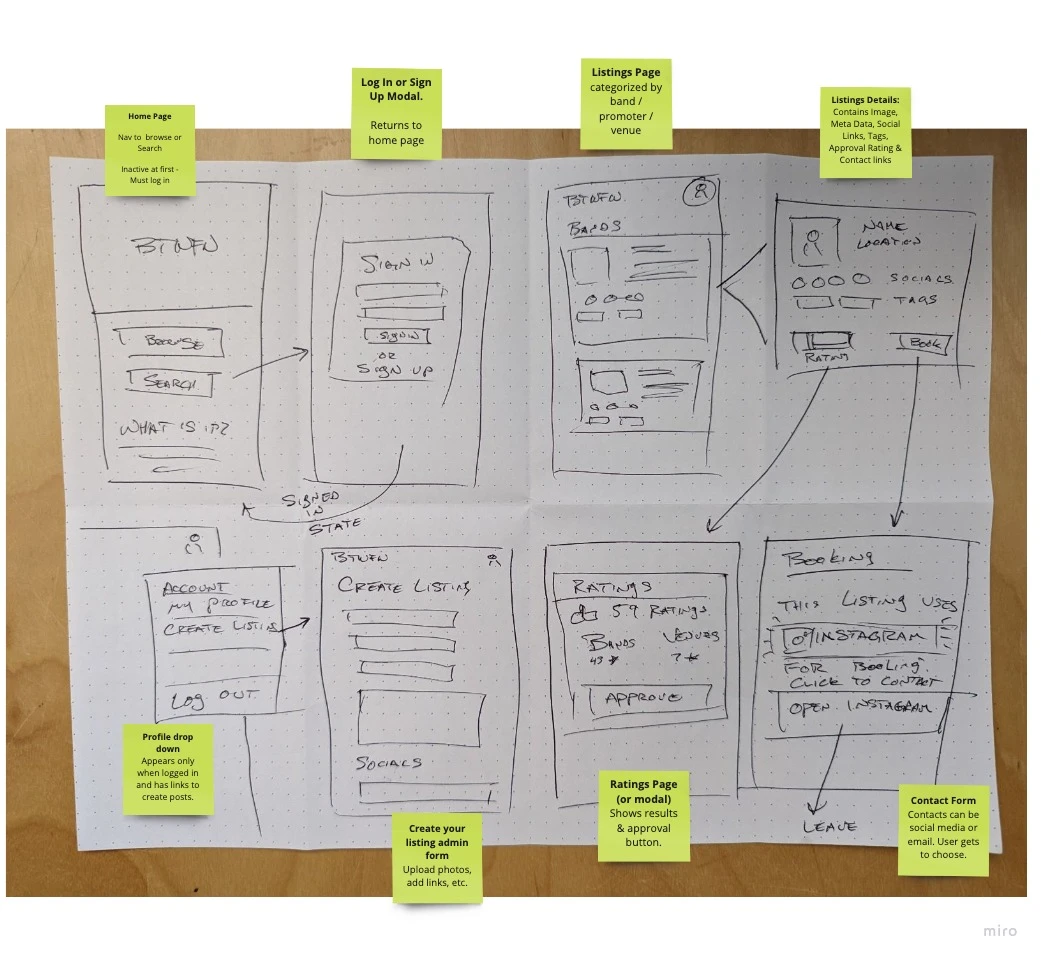
Low-fidelity sketches focused on:
- Streamlining the venue discovery process
- Reducing friction in outreach and communication
- Eliminating unnecessary features early to maintain focus
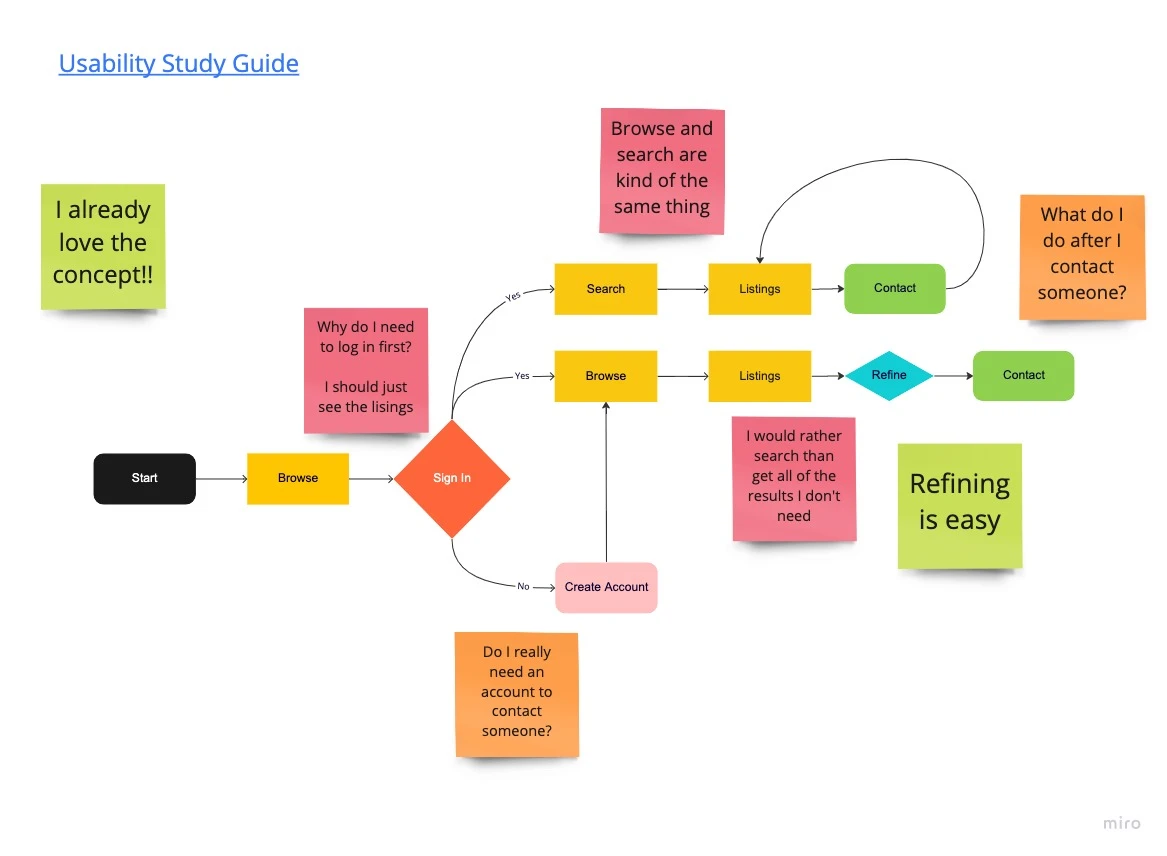
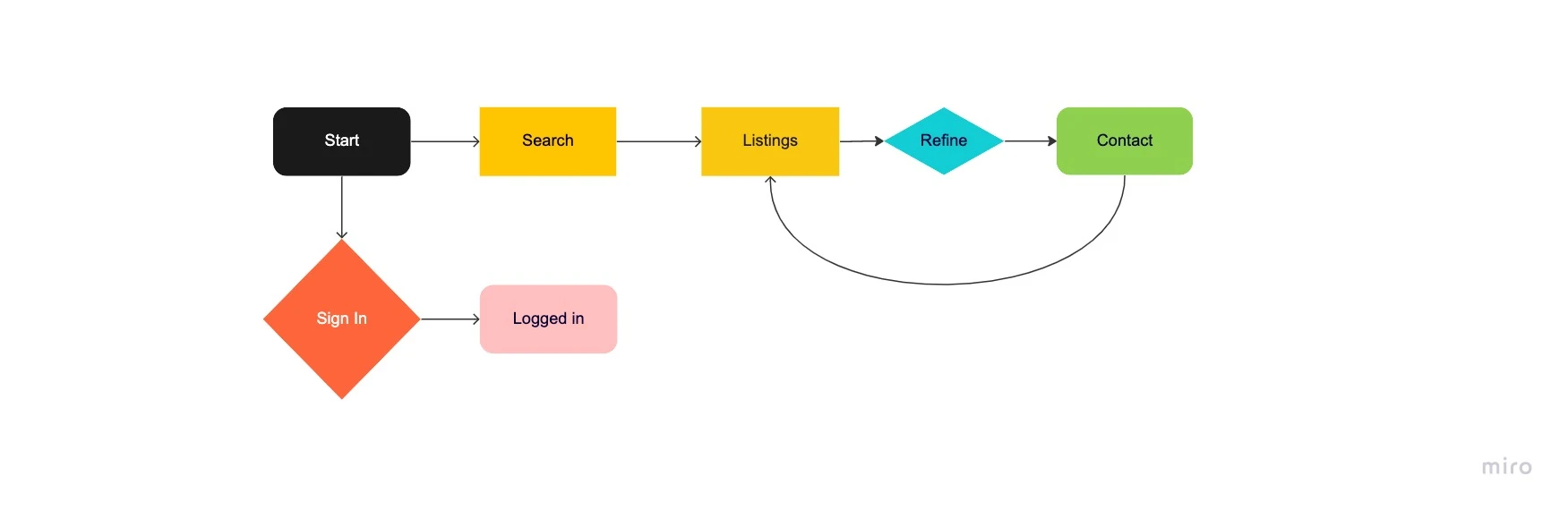
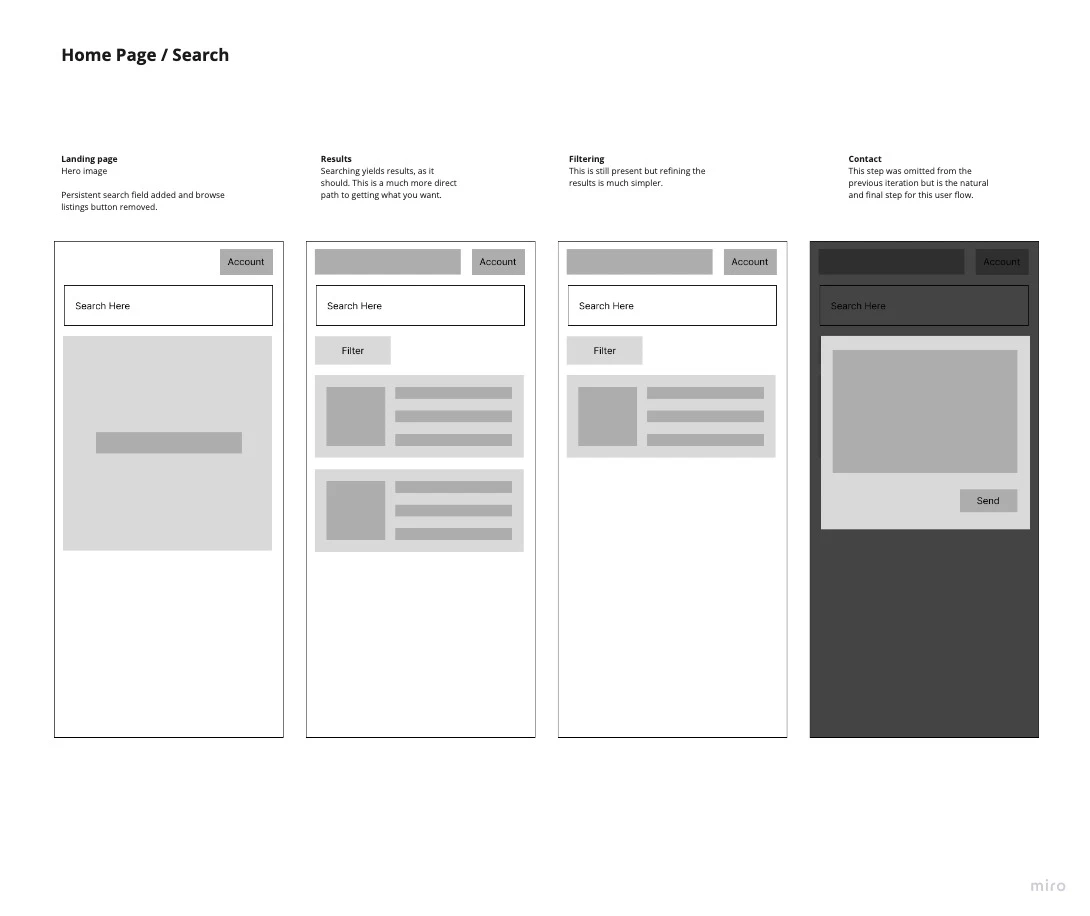
As the project moved into mid-fidelity wireframes and user flows, several initial ideas were intentionally removed to maintain a focused, efficient experience.
PROTOTYPING
Using a combination of Adobe Photoshop and Figma, early prototypes revealed several areas requiring refinement:
- Accessibility standards needed improvement
- Sorting and filtering behavior required clarification
- The communication workflow needed simplification
Testing validated the need for at least one additional iteration to resolve these issues.
ITERATION & REVIEW
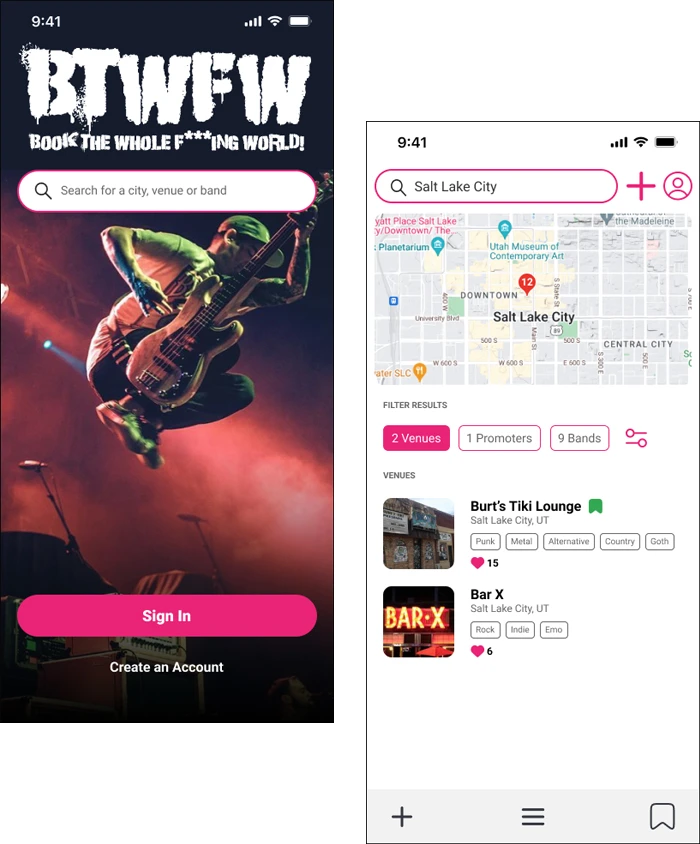
User testing and design reviews led to a pivotal decision:
All users should have access to venue and band data without creating an account.
Only contributors would require accounts, significantly reducing onboarding friction and future moderation overhead.
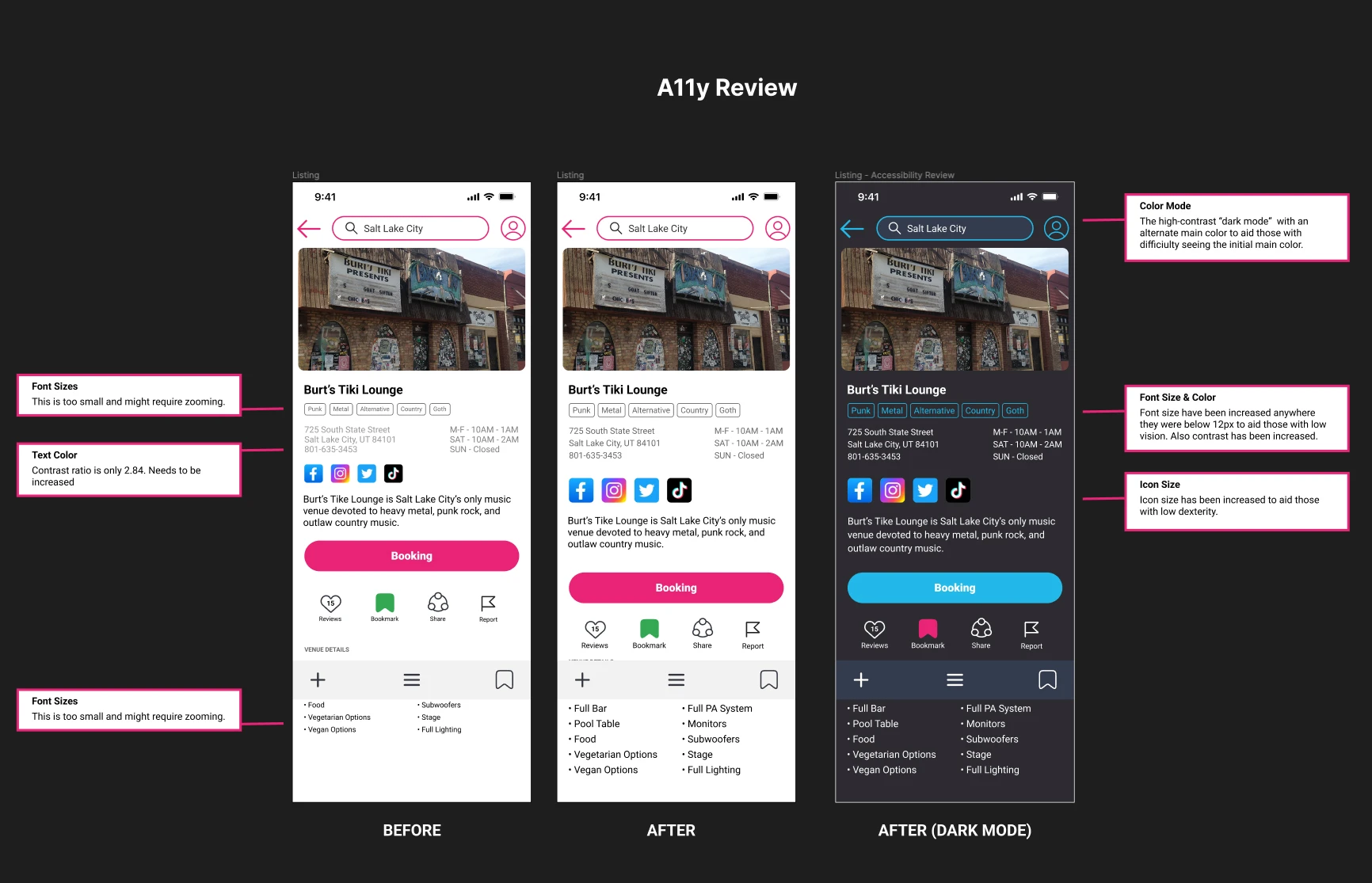
A final iteration focused on accessibility improvements, including:
- Color contrast compliance
- Improved font sizing and legibility
- Larger, more forgiving touch targets
SOLUTION & IMPACT
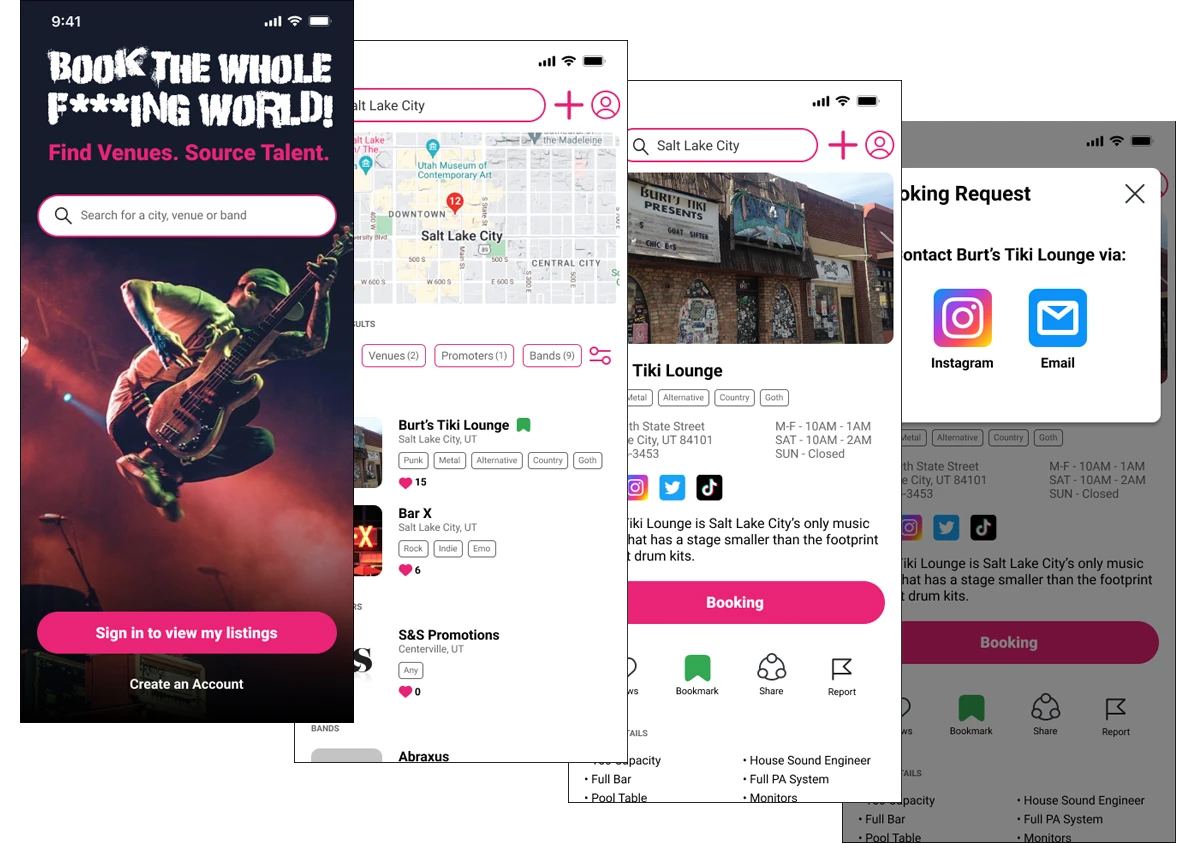
The final design supports:
- Social media-based communication
- A simplified, mobile-friendly user flow
- Open access to booking data
- Accessibility best practices throughout
This version was identified as the v1 candidate for development.
BRANDING & PRODUCT EVOLUTION
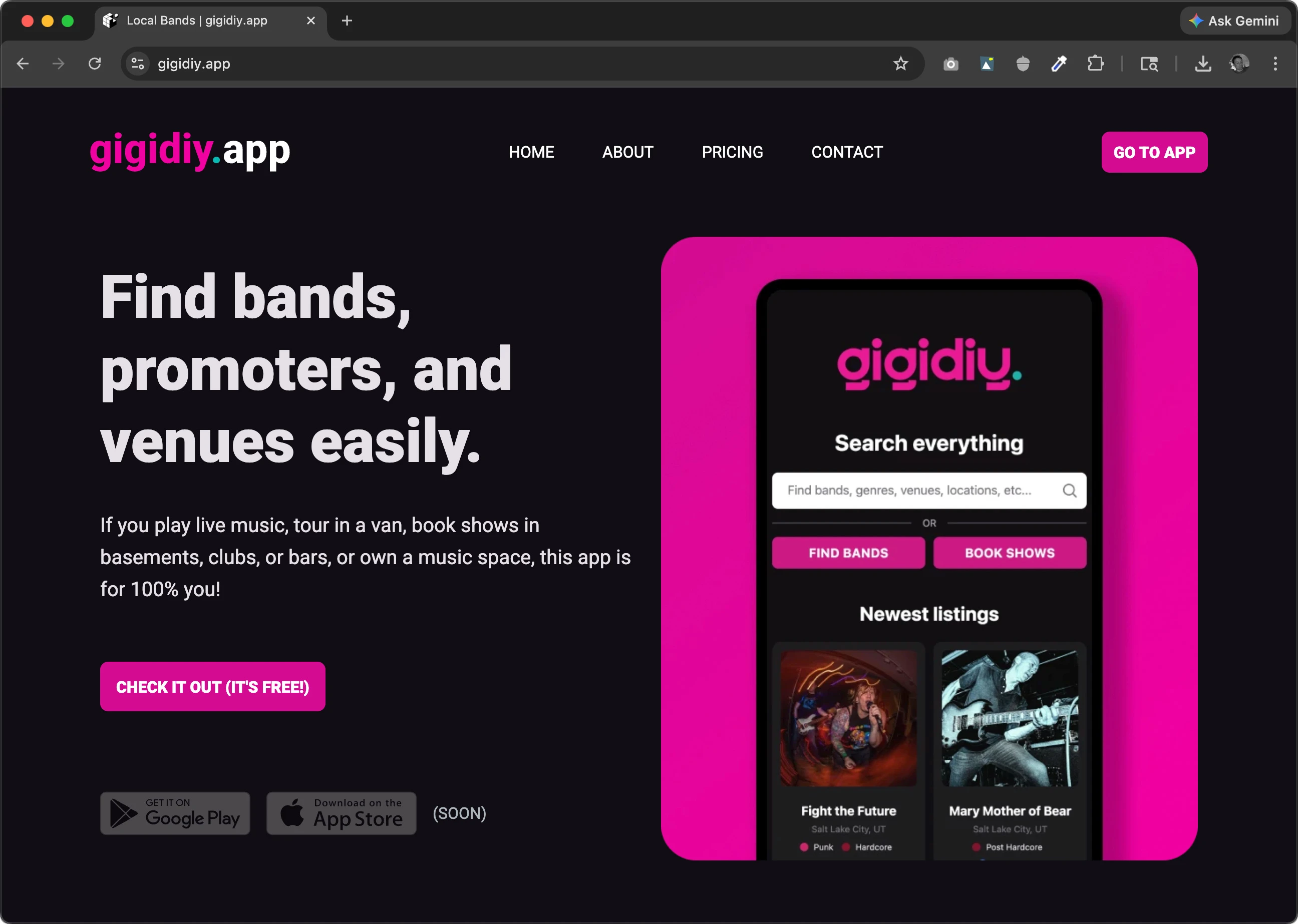
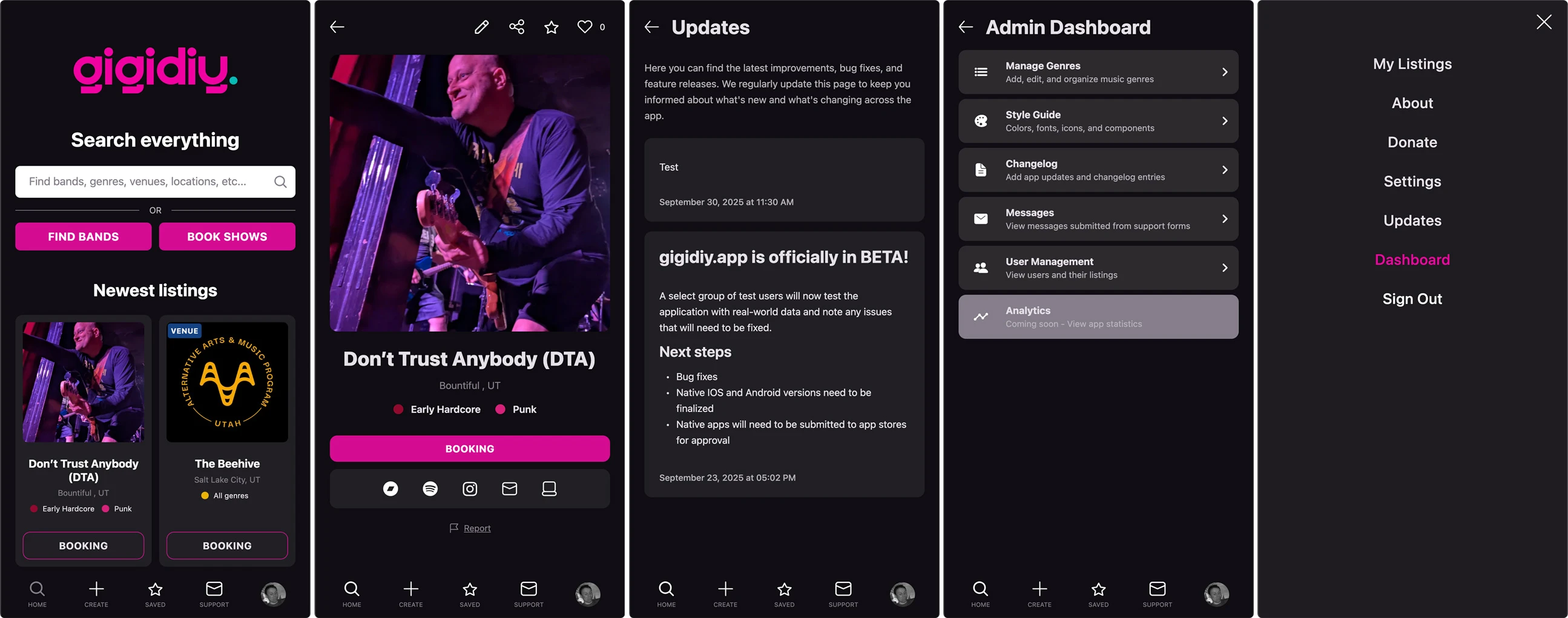
As the project moved from concept into active development, the product formally launched under the gigidiy.app brand. The earlier working title was useful during exploration, but the final name better supports long-term growth and broader adoption.
The gigidiy brand reflects:
- Momentum and energy (“gigs” as action, not content)
- Community-driven contribution
- A modern, lightweight tool rather than a monolithic platform
Visually, the branding emphasizes clarity and approachability, avoiding overly aggressive or nostalgic aesthetics. This allows the product to serve punk, hardcore, indie, metal, and adjacent scenes without feeling exclusive or dated.
From a development standpoint, gigidiy is being built as a phased release:
- Phase 1: Band-centric discovery and outreach
- Phase 2: Venue participation and expanded filtering
- Phase 3: Additional tooling and automation
Advances in consumer-friendly AI and modern web tooling have enabled a solo-led build process, removing traditional developer dependency and allowing the product to evolve organically alongside real-world use.
gigidiy.app represents the fully realized evolution of the original concept—same problem space, same community focus, now delivered as a scalable, accessible modern platform.
FINAL THOUGHTS
The foundation for this application is solid, and its phased approach allows it to grow responsibly. By prioritizing usability, accessibility, and cultural authenticity, gigidiy.app remains true to the DIY spirit while finally giving it the tools it deserves.