

Improving the Medication Experience for Veterans
OVERVIEW
The Medications experience on VA.gov allows Veterans to review prescriptions, request refills, and manage medications through the VA's online pharmacy system.
As Senior UX Designer, I focused on improving medication discovery and prescription refill workflows while introducing design systems thinking that improved collaboration across 10–15 designers working on VA health tools.
233% increase in digital prescription refills
55,000 → 185,000 refills between June 2024 - Jan 2025
ROLE
Senior UX Designer
Figma Lead
Problem
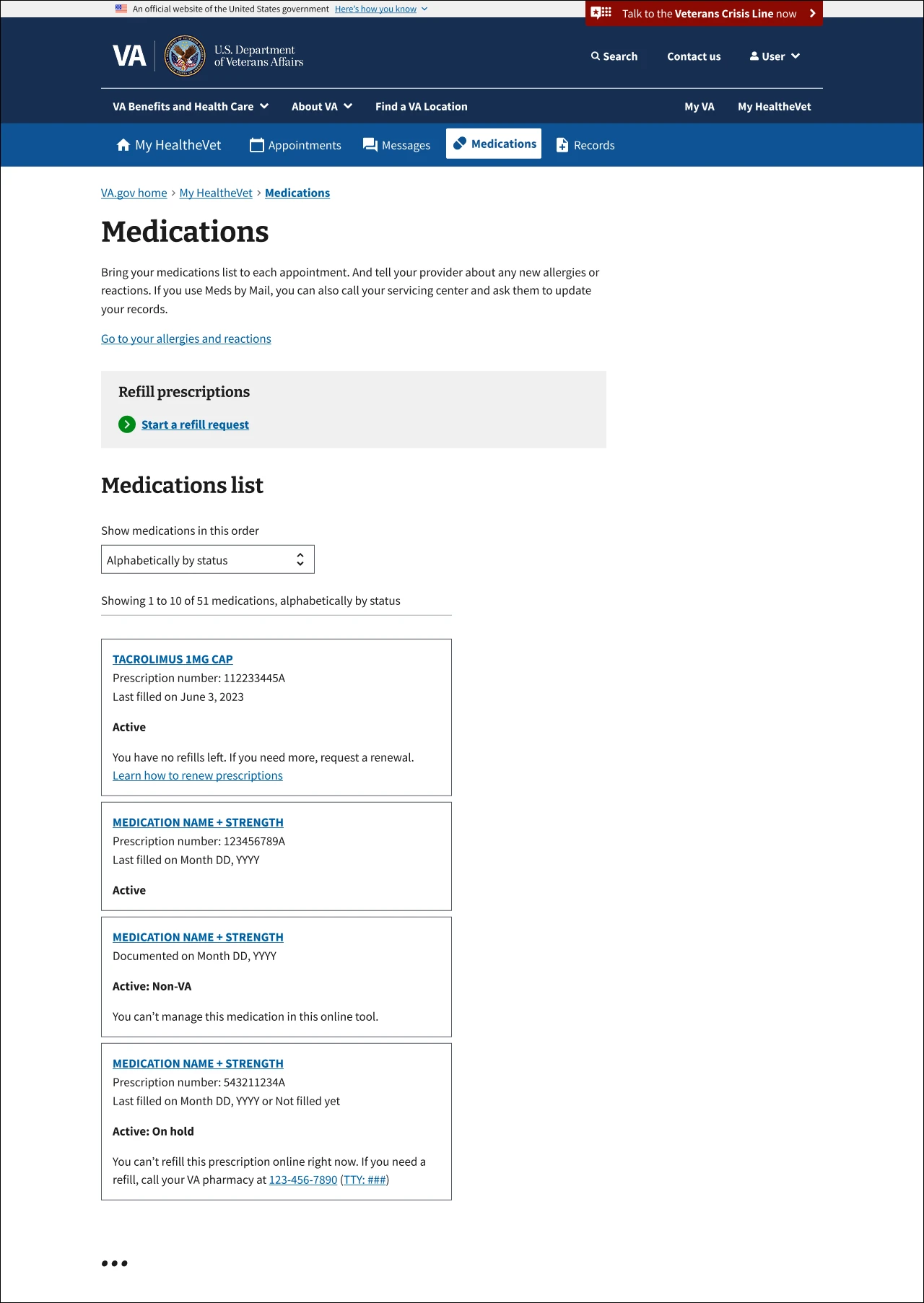
Veterans frequently manage multiple medications simultaneously. The existing interface required users to scan long lists of prescriptions to determine which medications were eligible for refill.
- Long medication lists (20 cards / page) that were difficult to scan
- Limited sorting options for locating prescriptions
- Unclear refill status across medications
Internal teams also lacked a shared reference for current product layouts, making collaboration across health tools more difficult.


Improving Medication Discovery
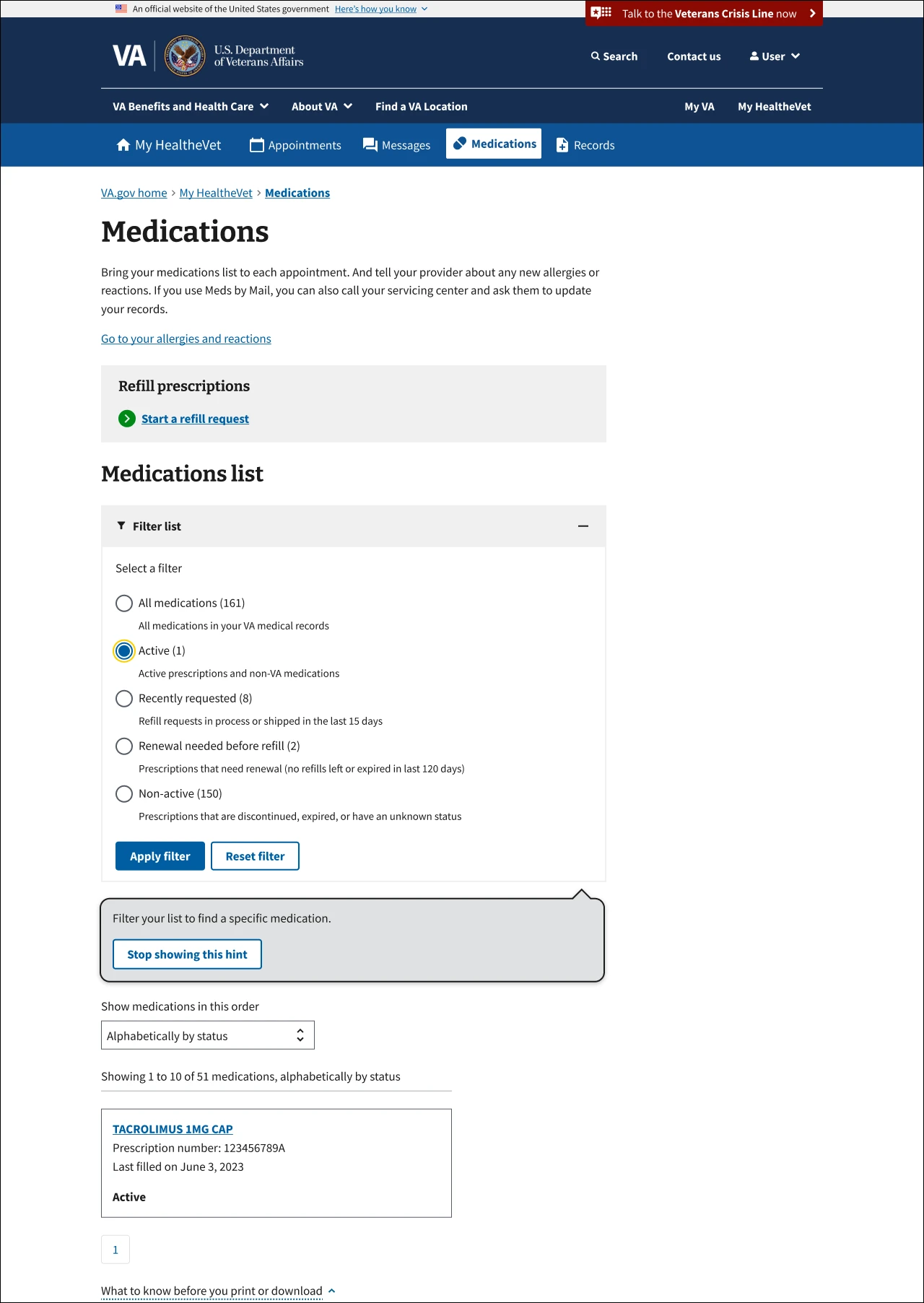
To reduce cognitive load and improve navigation, we introduced status-based filtering for medications.
Veterans could filter prescriptions by one of four categories as well as counts for each category:
- Active medications
- Recently requested
- Renewal needed
- Inactive medications
This allowed users to quickly identify medications that required action without scanning long lists. Feature performance was monitored using behavioral analytics and Veteran feedback.
Refill Workflow Prototyping
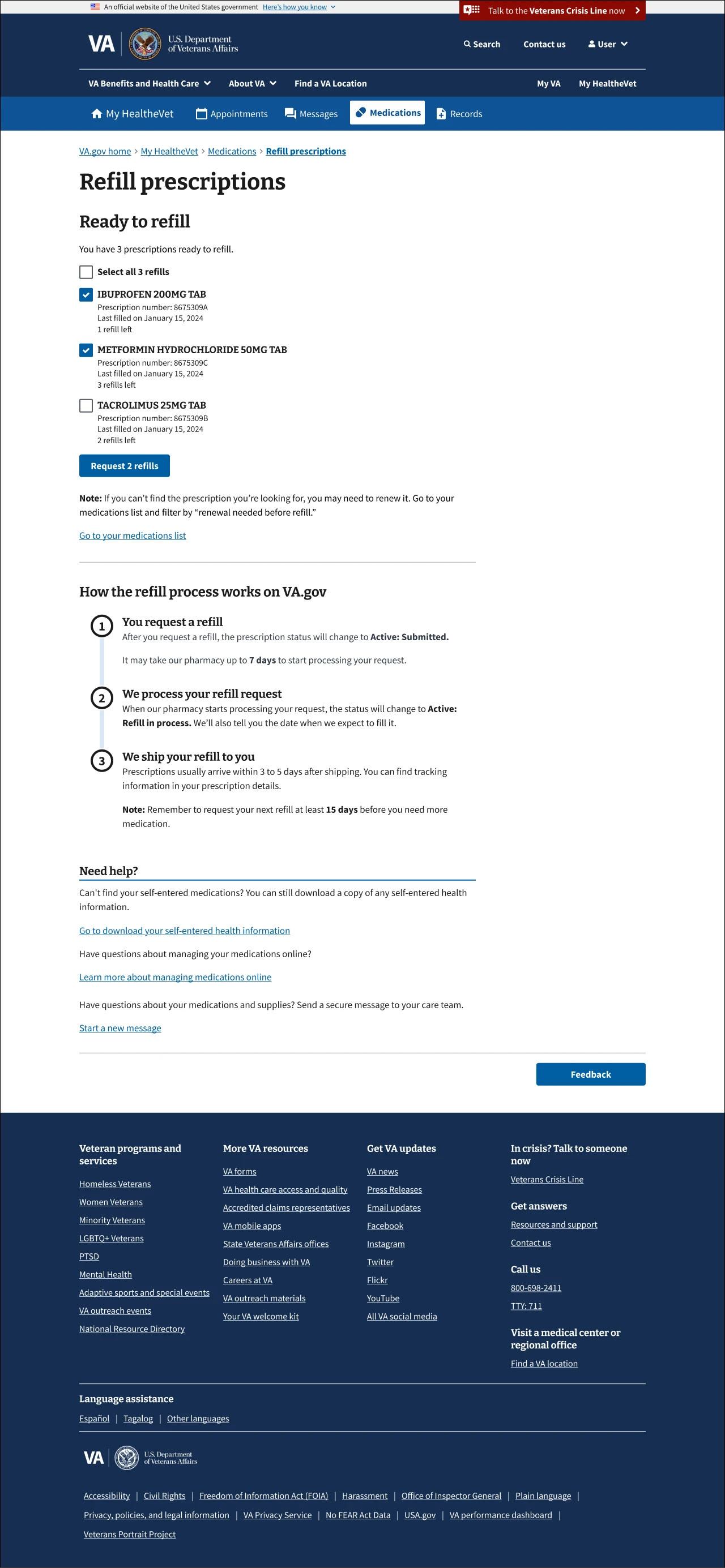
Requesting prescription refills functions similarly to an e-commerce checkout process, where users select multiple items and submit them for fulfillment.
To support usability testing, I built an interactive prototype in Figma using variables and conditional interactions.
Participants could:
- Select multiple medications
- Use select all / deselect all
- Simulate refill submission
- Remove medications once ordered
During usability testing sessions, I updated the prototype in real time to reflect participant feedback and support rapid iteration.

Design Leadership & Systems Thinking
While improving the medication experience, I also addressed collaboration challenges affecting the design team. Content updates and design updates were happening out of sync, and designers lacked a shared reference for current product layouts.
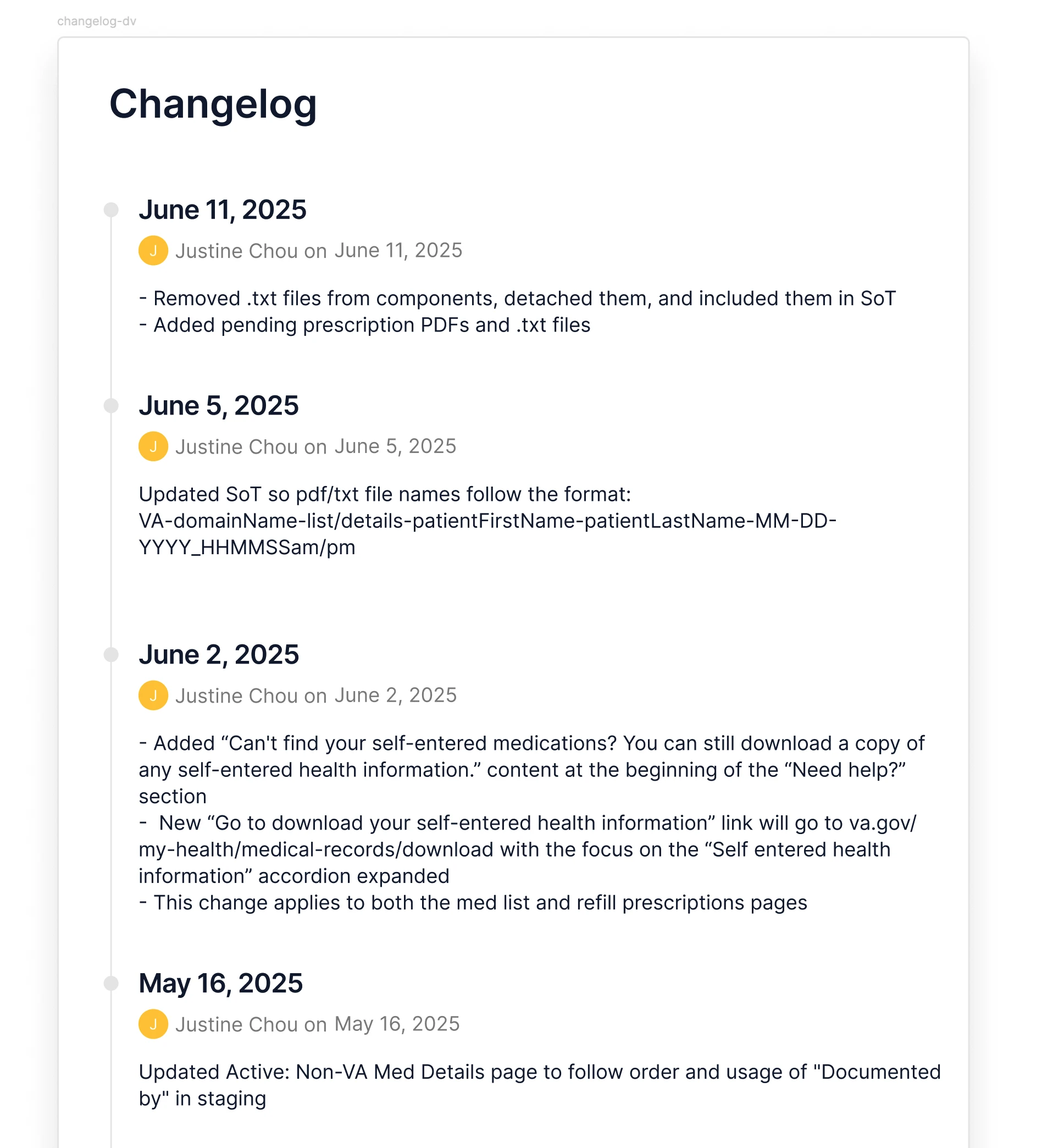
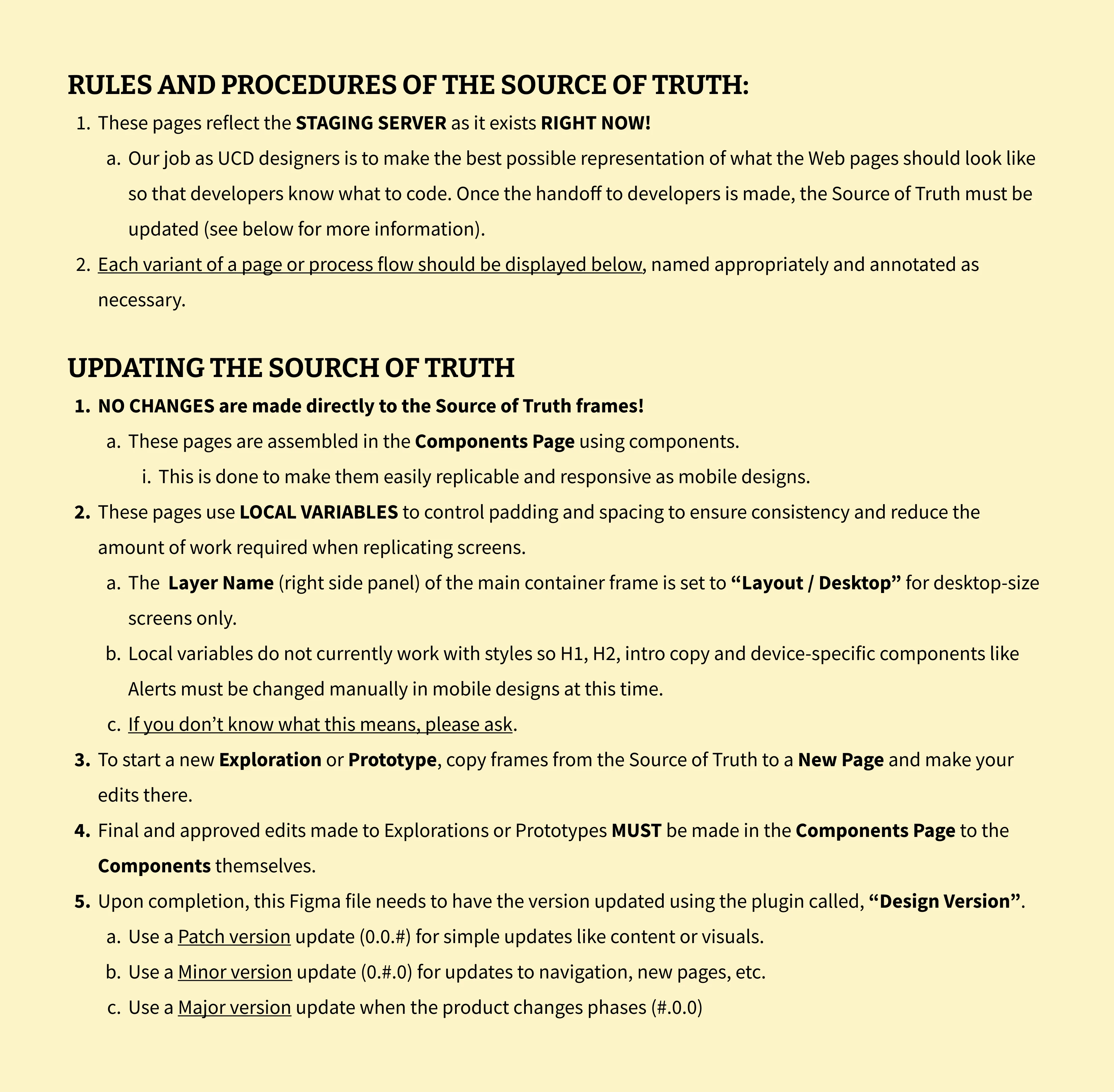
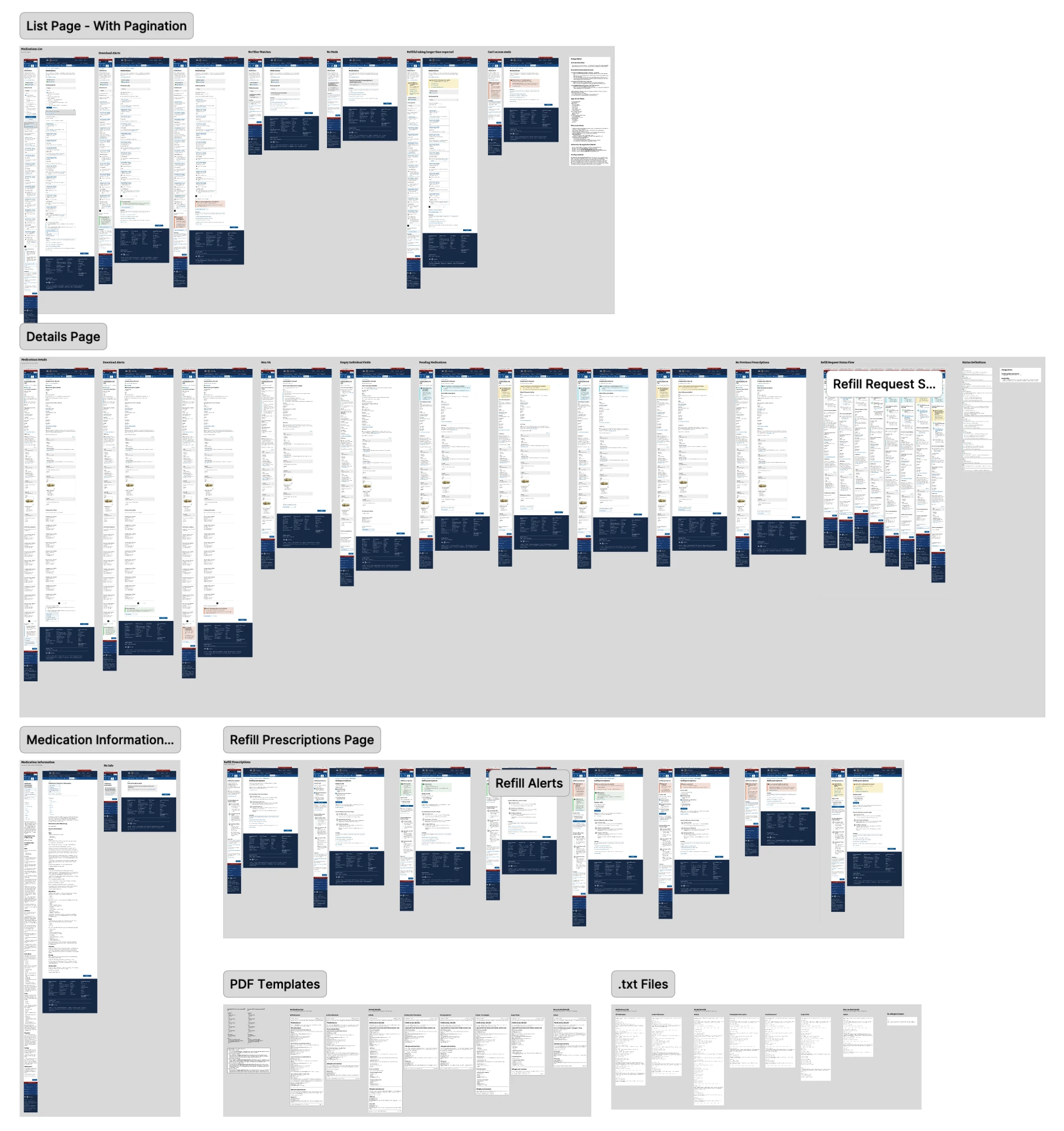
To improve alignment, I created a centralized Source of Truth design file in Figma used across VA health tools.
The system included:
- A design change log tracking updates
- Locked master layouts, accessible only to designers responsible for maintenance
- Print-on-demand PDF and TXT files for user records and text-to-speech accessibility devices
- Reusable page templates as Figma components
- Shared UI documentation
This workflow was adopted across 10–15 designers working on Medications, Medical Records, and Secure Messaging, improving consistency and visibility across products.
Outcome & Impact
The redesigned medication experience launched on VA.gov and is now used by Veterans nationwide through the My HealtheVet ecosystem.
The improvements made it easier for Veterans to identify medications requiring attention and complete refill requests online, contributing to a 233% increase in digital prescription refills.
Beyond user-facing improvements, the introduction of a shared Source of Truth design workflow strengthened collaboration across health tool teams, helping maintain consistency as the platform continues to evolve.
This project highlighted the value of combining product design improvements with operational design thinking—improving not only the user experience, but also the systems and processes that enable teams to deliver better digital services at scale.
